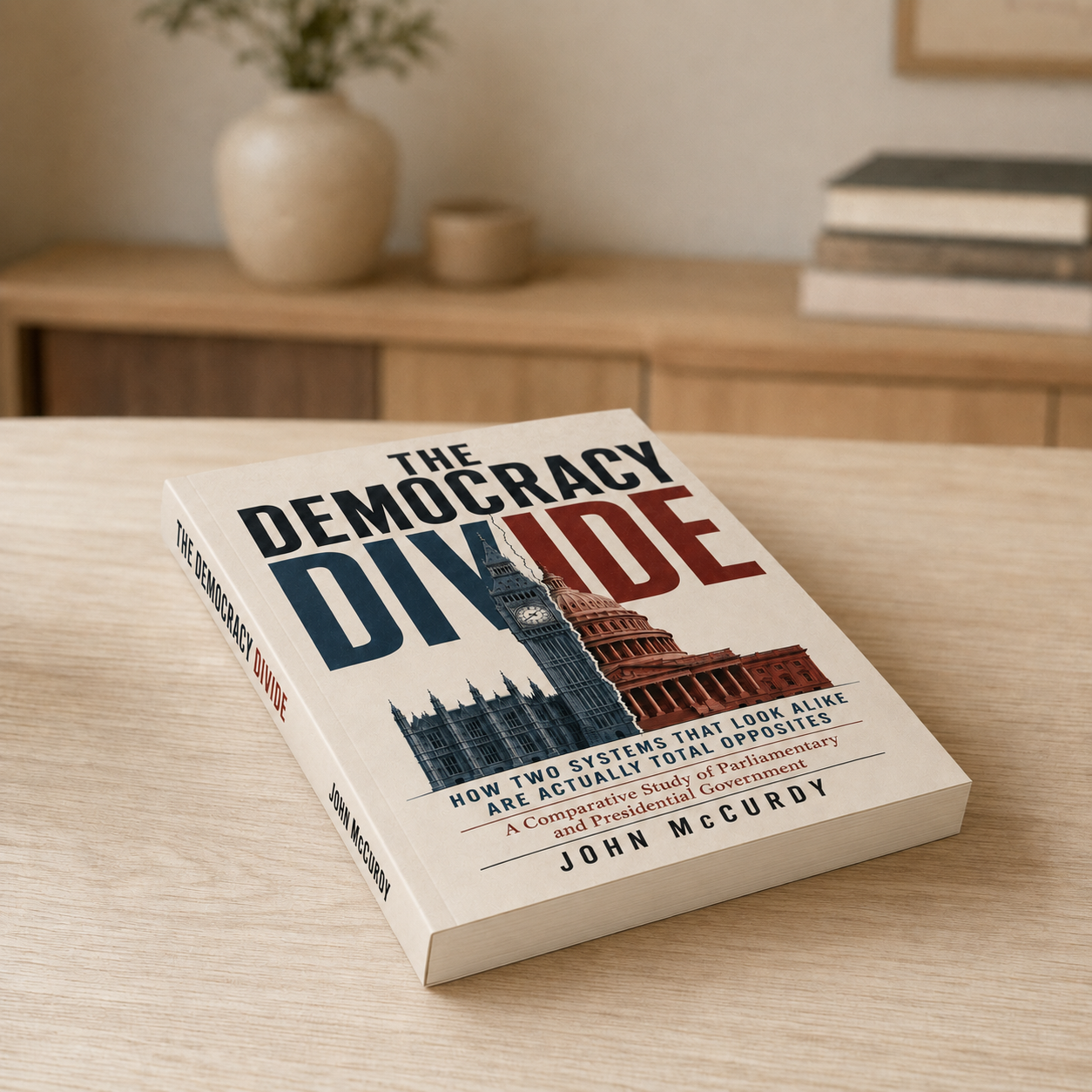
ABOUT THE BOOK
Every modern democracy is built on one of two constitutional foundations: the parliamentary system, pioneered at Westminster and adopted across most of the democratic world, or the presidential system, invented in Philadelphia and copied — with catastrophic results — across Latin America and Africa. Most people assume these are minor variations on the same theme. They are not.
The Democracy Divide traces the history of both systems from their philosophical origins to their modern consequences, drawing on the comparative research of Juan Linz, Arend Lijphart, and Walter Bagehot to answer a question few political books ask directly: why do presidential democracies collapse so much more often than parliamentary ones?
The answer lies in constitutional design, not culture, character, or luck. Presidential systems divide legitimacy between an elected president and an elected legislature, and offer no peaceful way to resolve the conflict when they collide. Parliamentary systems don't have this problem — because they were never designed to have it. Drawing on case studies from Australia, the United Kingdom, and the collapsed democracies of Latin America, this book makes the case that the difference between these two systems isn't academic. It's the difference between constitutional crisis and constitutional stability.
For readers of How Democracies Die, On Tyranny, and Tyranny of the Minority — and anyone trying to understand why American democracy keeps finding itself at the edge of a cliff its parliamentary counterparts never approach — The Democracy Divide offers a rigorous, clear-eyed, and occasionally unsparing verdict on which system was built to last.
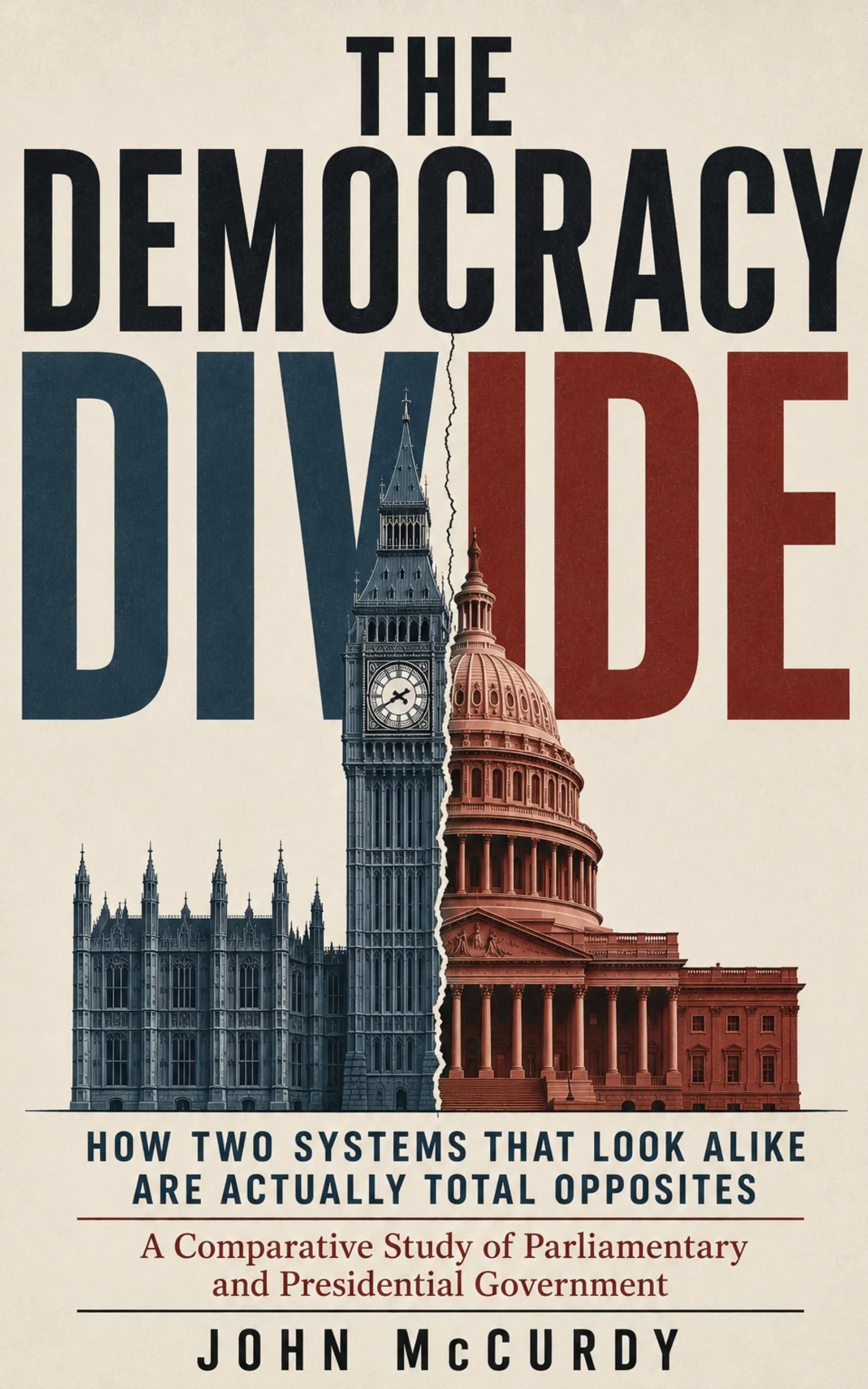
The Democracy Divide
A Comparative Study of Parliamentary and presidential Government
If you thought British, German, Indian or Australian governments worked the same way as the United States, think again.
"A clear-eyed case for why the shape of a government matters as much as the people running it."